
The following feature is a TMN compilation to assist readers in understanding an extreme amount of technical data on what BESS is, what it is not, and determining researched proven fact from fiction. The information contained this week is compiled by Paige Wright and Collyn Wright (surprisingly, no relation!) based off hours dedication to locating factual information. Mistakes are imminent with this much information; however, errors will be promptly corrected.
The Monday, November 10, 2025, Menard County Commissioners Court meeting agenda item #15 was a preliminary introduction of the proposed project by the developer and may be mentioned within this text. With many concerned citizens in attendance, the Court allowed a more liberal amount of public comment than usual in order for everyone who desired so to speak. You can view the presentation part of the meeting here: Menard County Commissioners meeting; November 10, 2025; agenda item 15, BESS presentation - YouTube
By Paige Wright
Local opinions... Are all over the place!
The proposed BESS site in Menard County has ignited a wave of emotion across parts of the community. There are now two dedicated websites advocating the nays and yays of the proposed facility. You can access: www.dontbesswithmenard.com for an anti-project view. The website lists copyright and all rights reserved by “a Concerned Menard Citizen and Land Owner.”
The group has advertised via Facebook promoting a Menard County Information Meeting to be held on Thursday, December 4, 2025, at Club Victoria at 5 p.m. “Experts and state level representatives” are slated to be in attendance for a presentation and Q&A, along with a meal. On the group’s active webpage, The Menard News requested a list of speakers to include with this information and had not received a response by an extended deadline.
On the other end of the spectrum, www.blackgoldbess.com explores a more positive outlook for the installation of the proposed site. The creator of this site is announced as this author, me, Paige Wright. If you are unaware of my involvement in the topic, please read the disclaimers and information the bottom of this page.
In Part 1 of our Thursday, November 20, 2025, feature “Battery Energy Storage Systems in Menard: Does the reward outweigh potential risks?” we covered what a Battery Energy Storage System (BESS) site is, what it’s made up of, what it does, and why they are being built statewide to assist in the stabilization of the crippled Texas electric grid.
This week, in Part 2, we will address potential fire and dangers often associated with BESS sites and technology. Please be sure to read all the disclaimers provided on the page above, as your author and her husband, also a County Commissioner, are the owners of the potential 10 acres being considered for this project.
Major Safety Concerns Due to the use of lithium batteries, risk of fire leading to environmental damage and/or adverse human health conditions seems to top the list of local concerns about the proposed Menard County BESS site. The phrase “Moss Landing” (ML) is one heard often when speaking of battery storage fire. Moss Landing, CA experienced a frightful multi-day fire at the world’s largest battery storage grid in January of 2025.
The batteries in the facility burned up to 5 days, including flare ups, triggering the evacuation of 1,200 - 1,500 nearby residents. The Monterey County (CA) Supervisor told the local news station, “There’s no way to sugar coat it. This is a disaster.”
Responding firefighters were unable to contain the blaze. It was allowed to burn itself out, as has become common practice for such fires. The smoke spread over several counties. Actions, such as evacuations, were taken in an abundance of caution. An Environmental Protection Agency (EPA) report showed that two days after the fire, monitors showed the air in the area again met federal health standards. Similar reports were released concerning water contamination levels.
The specific cause of the Moss Landing fire is still being investigated. Proper cleanup of the site is ongoing as well.
Early in the development of BESS technology, fires and failures were much more common. This is the period where you find multiple failures and frightening damage and destruction. After the 2021 winter storm that revealed the fragility of the state’s electric grid, ERCOT put an economic emphasis on developing and improving battery storage to be safer and more efficient. This incentive and new focus on the sector resulted in the safety and efficiency of battery storage evolving very quickly as the industry learned and adjusted from incidents in real time.
Although the structure of the Moss Landing site was not the same as the proposed site in Menard County— ML was older and enclosed within a building; the proposed Black & Gold will feature modern containers within a fenced plot of land— the common factor is lithium batteries.
Lithium batteries are praised for their reliability and convenience and at the same time cursed for their potential to catch fire. We see it everywhere from the cellphones in our pockets to reports of electric cars bursting into flames without warning. There is no denying the inherent risk, no matter how miniscule, attached to the application of a 100-200MW battery storage site in the county.
According to the Electric Power Research Institute* (EPRI) fires at BESS facilities are rare but possible, primarily due to thermal runaway (overheating). The organization maintains that the risk of battery-related fires remains low, even as BESS capacity has grown significantly nationwide, particularly in Texas.
Modern BESS are equipped with comprehensive fire prevention and management technologies, including fire suppression, ventilation, thermal monitoring, and remote shut down protocols.
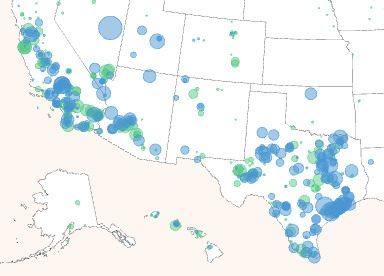
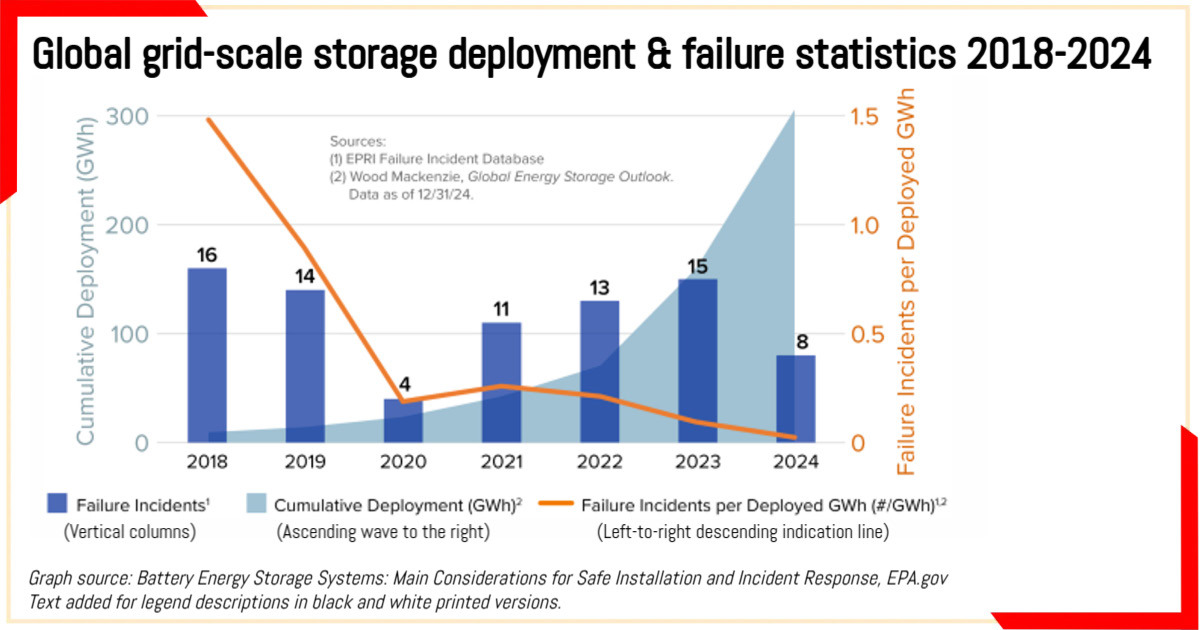
As quickly as the battery storage sector is growing in the state, Texas has not experienced a BESS fire despite having more than one hundred facilities. Nationwide, the failure rate at BESS facilities has improved by 97 percent between 2018-2024.
For the first time, the EPA recently issued wide-ranging safety guidelines for the BESS sector, aimed at providing a comprehensive research guide for communities and developers to consult when considering a BESS facility.
We are already out of space for Part 2, with so much information left to go. Check back for Part 3 next week, where we will get into additional safety concerns and mitigations, potential deed restrictions to protect the site in the future, required bonds for the ultimate decommission of the site, and more. We did not get to any specific reader concerns this week, but if you have one you’d like addressed by independent safety expert Mike Nicholas, please email paige@menardnews.com.
*EPRI is a research organization that follows science to help power society toward a reliable, affordable, and resilient energy future. EPRI is “rigorously objective” and does not advocate for any specific company, sector, or technology. “With a foundational mission to benefit society, EPRI delivers independent, objective thought leadership and industry expertise through a highly collaborative approach.”
A few things to know and consider: The land (approx. 10-15 acres) considered in the BESS topic below is owned by Tyler & Paige Wright, publishers of The Menard News. Paige is the author of this article. Tyler is a County Commissioner, who, as per the norm, will be recused from any decision the Court may eventually be presented with.
After this meeting we went straight to the state band contest Monday afternoon, allowing little time to get into too much detail on the meeting. We hope to devote more time to it in next week’s newspaper, as the News has some independent industry experts lined up to provide second opinions on the claims from Monday’s presentation. Until then you can view the meeting in its entirety (3+ hours) via the QR code printed here, or by visiting the link provided on the News Facebook page.