
Menard’s Church of Christ hosted Ralph and Twyla Williams on Monday. The Williamses are missionaries who learned rainwater harvesting methods from Billy Kniffen and are now putting that knowledge to use in the Maasai community of Tanzania. There, in the water-poor mountains, they are changing lives for the better by building rainwater collection systems and teaching the locals construction and maintenance.
The Williamses arrived in Tanzania in 2016, on the ground ready to help. Some friends in the States steered the duo in that direction and they soon realized the area’s absence of the most important substance to life—water. The district commissioner confirmed the need, telling Ralph the greatest need is to provide clean water to every household, yet he could not. Groundwater from the volcanic caldera underfoot is unfit, containing toxic levels of fluoride, according to Williams. Too much fluoride results in visibly browned teeth, and not-sovisible brittle bones.
Most of the region’s annual rainfall typically occurs March through May, when it can rain up to 16 inches. The problem is, it may not rain but a couple more times for the rest of the year. Recent history saw a 5-year drought without a drop of precipitation. Ralph says that Tanzania, along with most of the other eastern African countries, have invested a lot of time, money, and effort to provide clean water to their citizens, but to little avail. “They just can’t quite get it done.”
The scarcity of water forces millions of families across the country- and beyond- to reuse any available water as much as possible. For example, Ralph says a basin of handwashing water may also be used to make tea or boil rice later in the day. The average American family uses approximately 100 gallons of water per day, per person. At their home in Tanzania, the Williamses have mastered the “2-gallon shower” and use just 5 gallons of water each per day on average. In the Maasai Community, schoolchildren were required to bring a small bottle of water each day, for the school’s use—like cooking student lunches. There were no standards for the cleanliness of said water; however much of it was used out of necessity.
Enter the Williamses, who were ready and willing to help with a solution, however, had zero experience in rainwater collection methods. ‘How hard can it be?’ thought Ralph and Twyla. Through a friend of a friend the couple was directed to Menard, Texas, home of one of the most revered water resource specialists in the nation, Mr. Billy Kniffen.
Billy and Mary Kniffen are hard-working folks who support Menard through many organizations, including their church. The couple welcomed the then strangers Ralph and Twyla into their home for a crash course on efficient rainwater collection systems. “It was fast a furious,” recalled Mary of the couple weeks the Williamses spent cramming the heaps of information Billy and Mary were putting out. Twyla later said of rainwater collection “Turns out it was harder than we thought.”
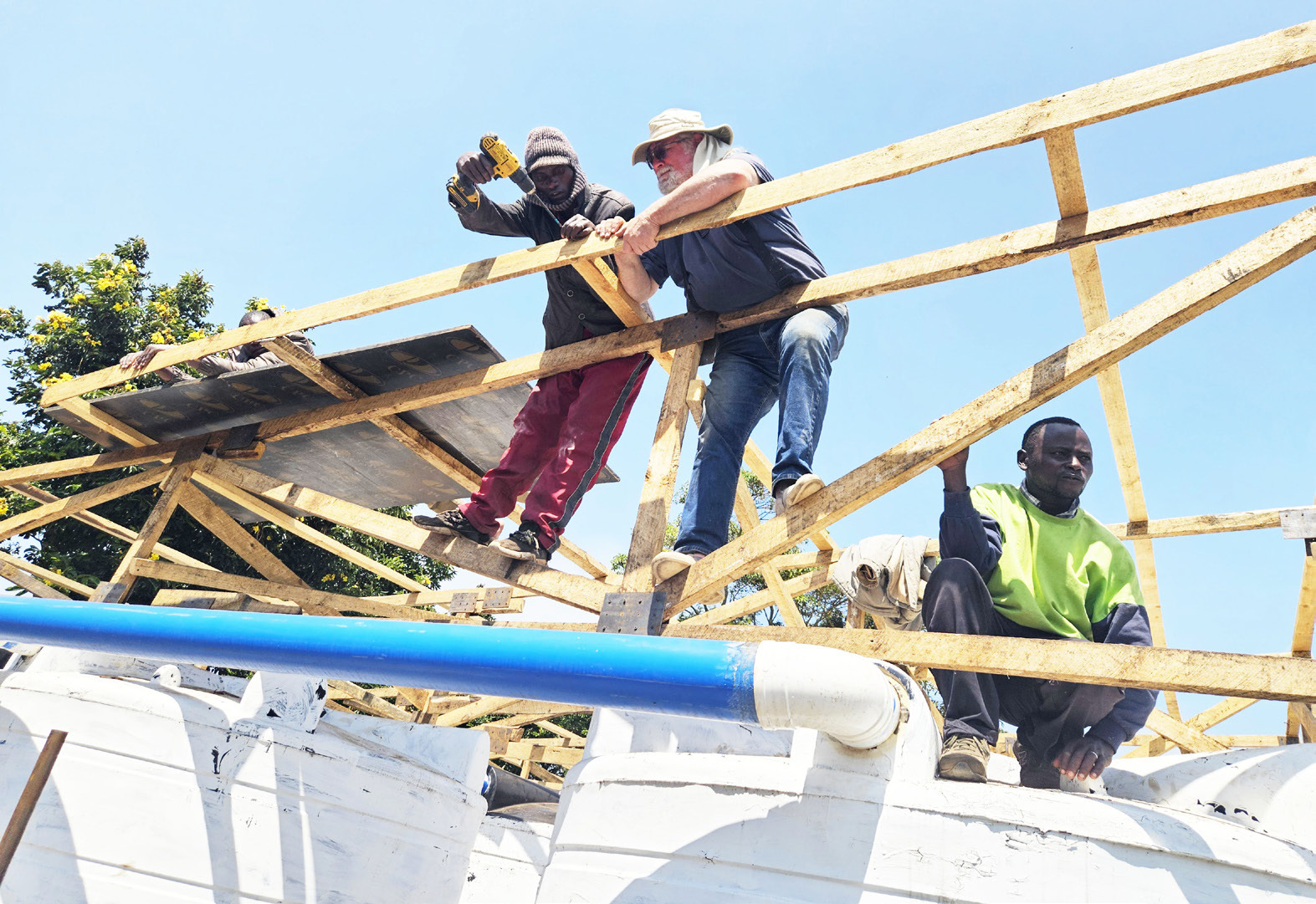
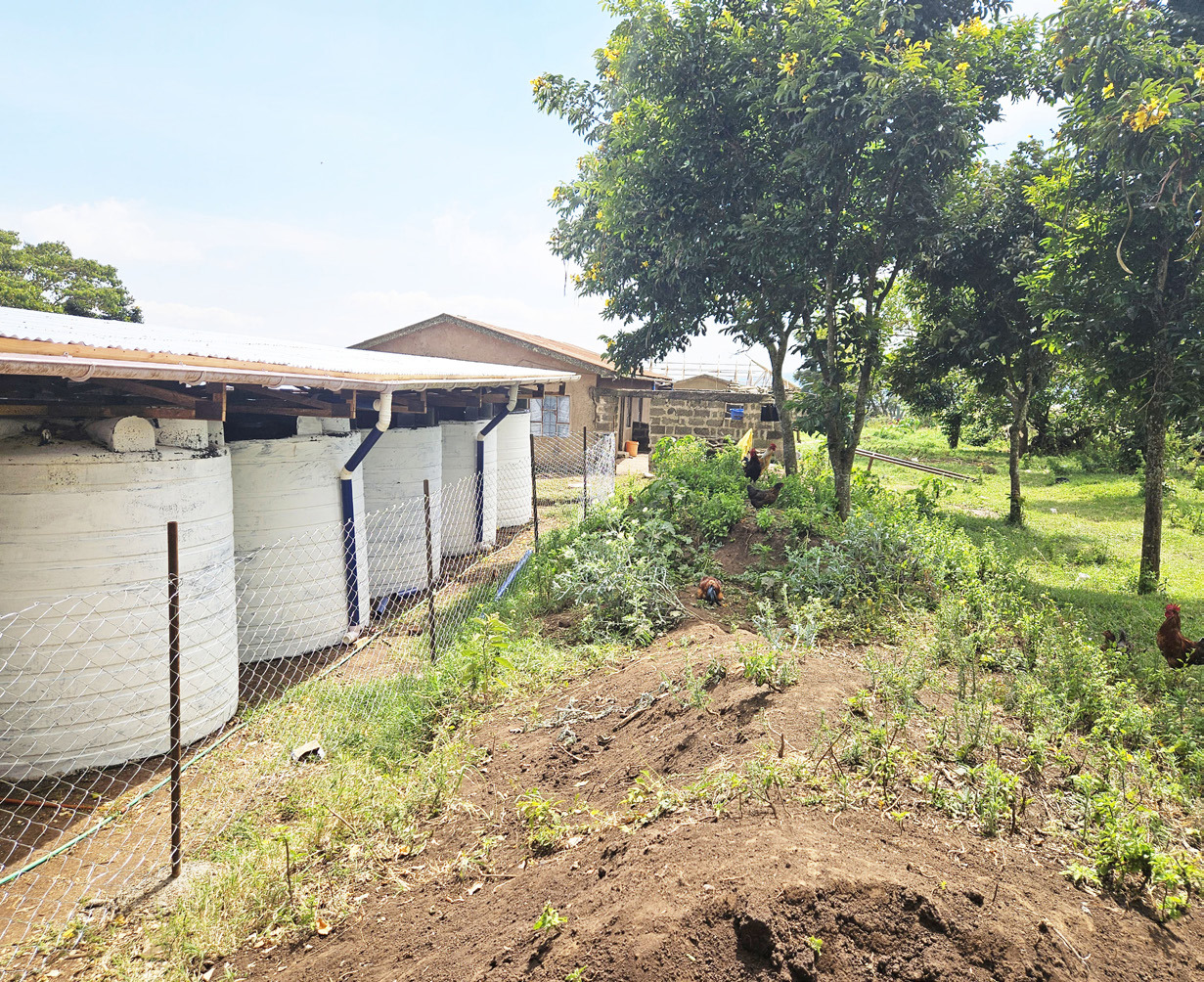
The missionaries took their newfound knowledge from Menard County straight to Africa, where the first project was their home in the Maasai Community. The residential system would replace the previous, outdated access to water in the home, which consisted mostly of hauling it daily from miles away, in buckets when available from a source provided to the public. Like every other home, there is simply no water source available. Ralph initially installed ten 3,000-liter (approx. 792 gallons per tank) tanks at their home to collect during the rainy season. He later added two 5,000-liter (approx. 1321 gallons per tank) tanks and they have not been without water since.
As the new rainwater gurus settled into their new surroundings with the big scary beasts (male African elephants) and the little scary beasts (assorted pest monkeys), they answered the call of the local Church of Christ, who requested a water system capable of performing baptisms. Ralph thought that was great, but they would do them one better and craft a system to provide clean drinking water as well.
And so, they did. Then, after just the first year of water collection, the church was already out of water. Exhausting the resources that quickly was not in the plan. Turns out the generous church was giving away so much water to villagers, it could not keep up. Williams took the initiative to advise church leaders on how to “budget” water reserves. Once that premise was understood, the system was so successful they next planned to build a school next door.
Quickly through the years, Ralph and Twyla arranged for several more water catchment systems to be installed at a medical clinic—which was built but had no water source—and schools, and well as a large community station to serve villagers, another school with teacher housing, and a rehabilitation center for severely handicapped children. The group is currently on their seventh project in the local Arusha region so far.
Ralph is the main man on the collection projects, but he’s not alone. He demonstrates and teaches the discipline and construction to the locals, as well as maintenance, repair and upkeep once the system is installed. “We hand everything over and it’s then their responsibility,” said Ralph.
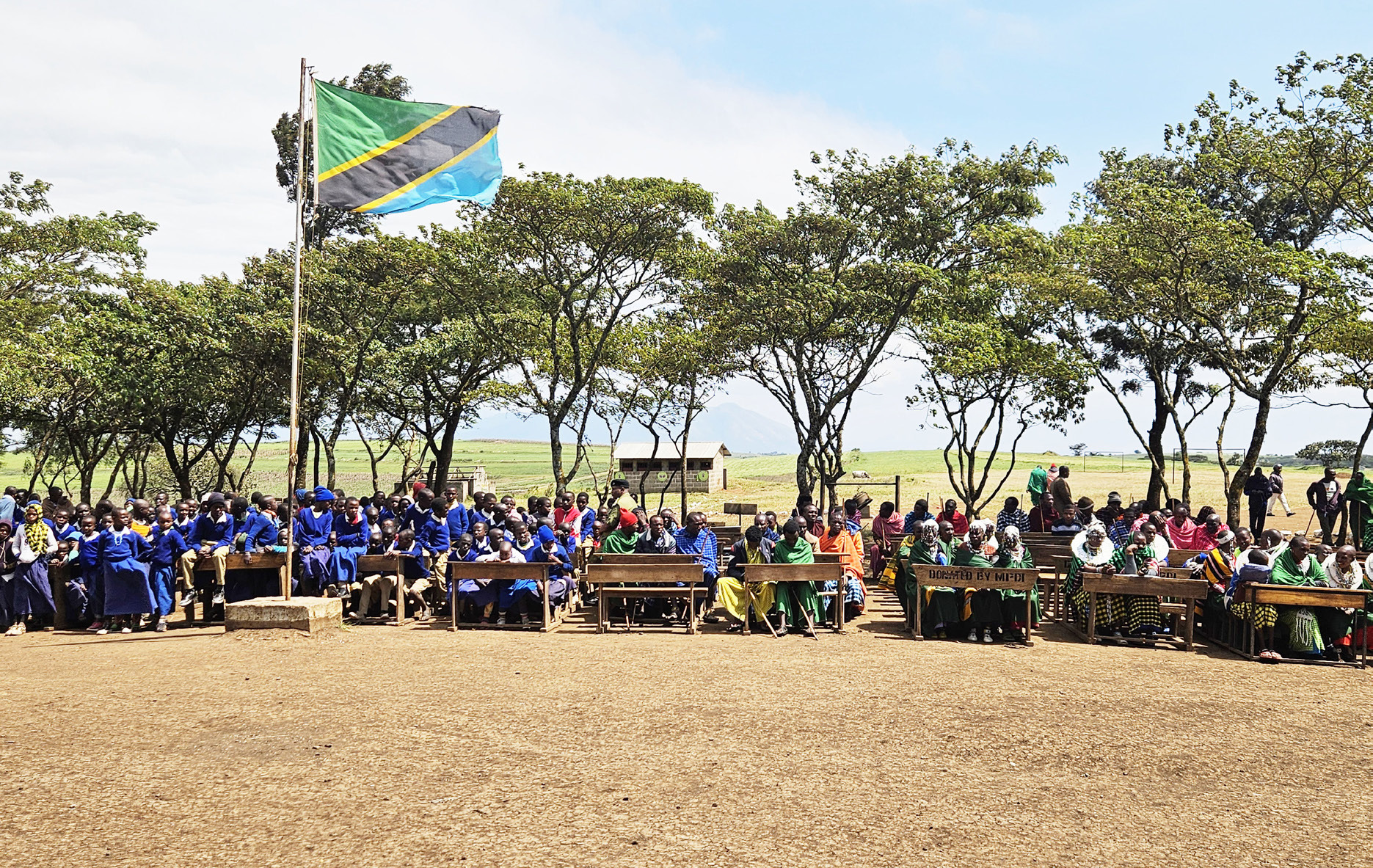
Each facility decides what their water distribution policies will be. One school has a purposely oversized system to collect more rainfall than needed for the building. From their tanks, they ran an underground pipe away from the bustling schoolyard, so community members can access the water without interfering with students.
Paulo, a villager who has worked for and with the Williamses for years now, is up to 5 catchment tanks installed at his home. The result is that his wife no longer spends half a day or more, every day, walking and hauling the day’s water rations. They can sell water to neighbors. They have clean water to support a garden for fresh greens, which means a healthier diet for the family and another commodity to sell. Paulo is part of a 4-man team that have become water collection experts in their own right. The group is generous with their acquired knowledge, and often teach their skills across the country. “We’re beginning to make this a homegrown initiative,” said Ralph. “We are really proud of them.”
Some facilities charge a small fee for their clean collected water. Ralph says it makes sense both financially and culturally for the entities to sell the water as opposed to a free-for-all. Aside from the income, having a tangible product creates more respect for and responsibility of the resource.
There are festive celebrations when a system is completed and in service. Villagers dress in their best formalwear, eat, dance, and thank God—and the Williamses— for providing access to safe water. Both Ralph and Twyla have been working to learn the Maasai language but report almost everyone there knows some English and chooses to speak to them that way. Ralph has picked up a few valuable construction terms to use while building with the locals. Twyla specifically recalls a notable language connection she made. From the construction phrase often dictated by Ralph, ‘turn it the other way,’ she recognized similar words in a celebratory hymn, “You have come to Jesus; don’t turn me away.”
International Rotary Clubs have been a major funding source for these important projects. Both local Clubs and across the United States. Other sources are specific grants and outright donations to the cause. Ralph and Twyla are primarily responsible for raising the means to build systems. “We accept donations for the projects and like to keep that pot separate from our personal finance pot,” said Ralph.
If you would like to donate toward Ralph and Twyla’s clean water efforts, you can make a check payable to Menard Church of Christ, just be sure to note “clean water” in the memo. These funds will go toward their increasing projects. Donations can be mailed to the church at P.O. Box 217, Menard, TX 76859, or dropped by the news office if that’s more convenient.
When asked how his personal finance pot is faring, Ralph grinned and noted he is comfortably used to being a broke missionary. If you feel called to donate to the Williamses personally, the Church of Christ or Billy and Mary Kniffen can accommodate that wish. For more information on Clean Water for the Maasai Community, you can contact Ralph via email: ralphwwilliams@ gmail.com. Locally you can call Billy Kniffen at 325456-5772.